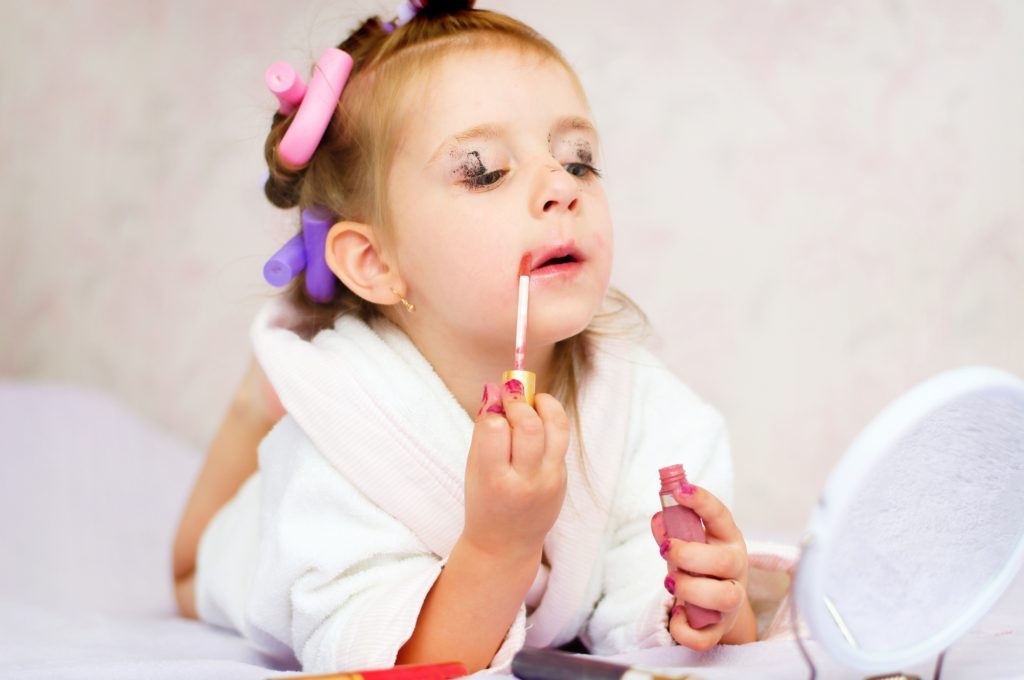
بدون شک، کودکان زیباترین فرشتگان خدا هستند، که برای زیبایی، به هیچ مواد آرایشی نیاز ندارند. پوست آنها بسیار لطیف و زیبا است و استفاده از لوازم آرایشی، به پوست حساس و زیبا آنها آسیب میزند. لوازم آرایشی، دارای مواد شیمیایی است، که گاهی برای بزرگسالان نیز، میتواند مضر باشد، چه برسد به پوست حساس و لطیف کودکان.
کافی است فقط چند دقیقه، از فرزند خود غافل شوید و او را در یک اتاق تنها بگذارید، با صحنهایی مواجه خواهید شد، که برای اکثر مادرها آشنا است. اگر میز لوازم آرایش شما، کاملا بههم ریخته است و در و دیوار اتاق، با رژ رنگی شده است، بدانید این کار یک فرشته کوچک و زیبا است.
تقریبا همه کودکان، به ویژه دختر بچهها، علاقه زیادی به لوازم آرایشی دارند، جای تعجب هم نیست، رنگ بندی و بسته بندی، جذاب و رنگارنگ محصولات آرایشی، حتی خانومها را نیز به وجد میآورد. نکتهایی که باید به آن توجه داشته باشید، واکنش شما هنگام مواجه شدن با چنین صحنهایی است. اگر دیدید فرزند شما، سعی میکند خود را با هیجان آرایش کند، خونسرد باشید و دعوا و فریاد زدن را کنار بگذارید.
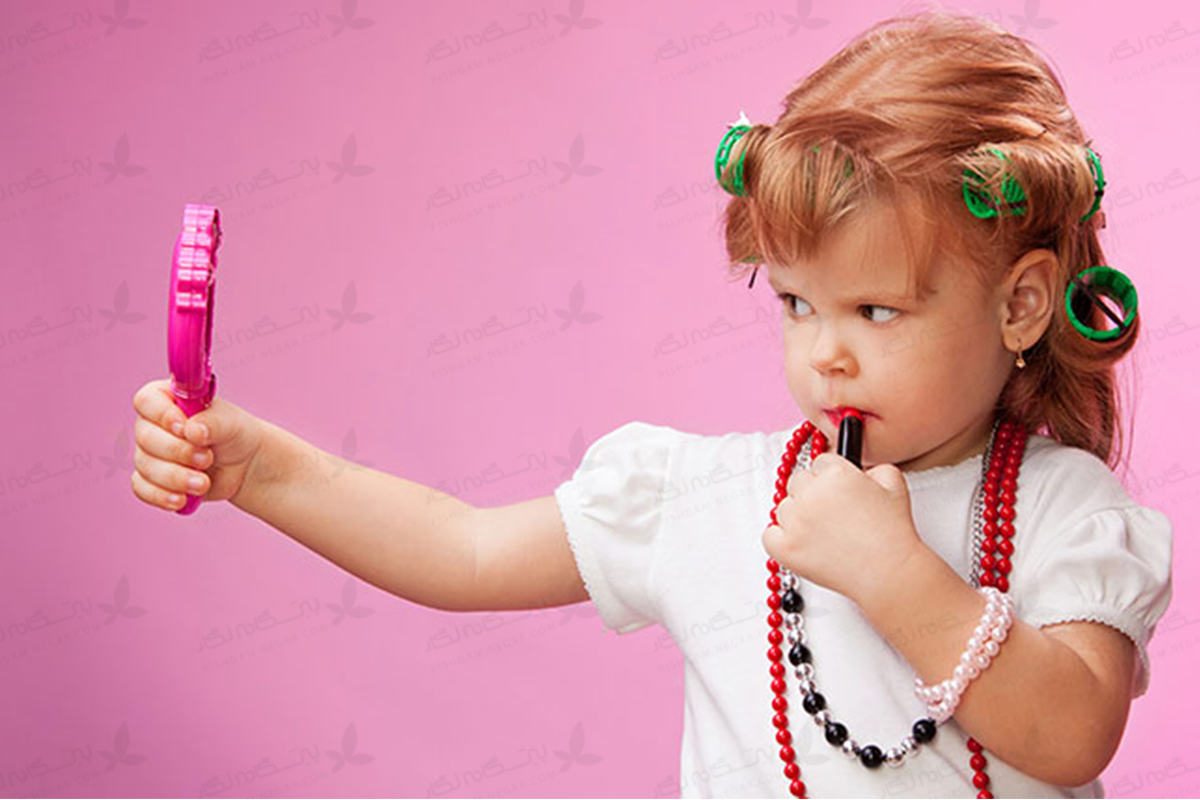
با توجه به اینکه در کشور ایران، متقاضیان زیادی برای مصرف لوازم آرایشی وجود دارد، بنابراین کودکان در محیطی رشد میکنند، که اکثر اوقات مادرخود را در حال آرایش کردن میبینند و درست مثل زمانیکه، ما کفش مادر خود را میپوشیدیم و از او تقلید میکردیم، کودکان نیز با استفاده از لوازم آرایشی، از مادر خود تقلید میکنند و سعی میکنند، شبیه او شوند.
در این میان، نقش سریالها و کارتونها را دست کم نگیرید. کودک با تماشای برخی سریالها و دیدن شخصیتهایی که برای زیباتر شدن و جلب توجه، آرایش غلیظ میکنند، از آن شخصیتها الگوبرداری میکنند یا کارتونهایی که، پرنسسها و شاهزاده کوچولوها، آرایشهای جذاب و مدلموهای زیبا دارند، توجه کودک را به خود جلب میکنند.
علاقه کودکان و دختر بچهها به لوازم آرایشی، ناشی از کنجکاوی آنها برای کشف محیط پیرامون است. آنها دوست دارند همه چیز را بچشند، لمس کنند، بو کنند و … وقتی کودک لوازم آرایشی رنگارنگ مادر را میبیند، کنجکاو میشود آن را استفاده کند، تا مثل مادر زیبا و جذاب شود.
گروه سنی پنج تا شش سال، گروهی است، که در آن حس کنجکاوی کودکانه شکل میگیرد و آنان به دنبال، کشف تفاوتهای خود با افرد بالغ هستند و برای درک بهتر این موضوع، آنچه را که میبینند، انجام میدهند، در حقیقت الگوبرداری میکنند.
How Extra Places Promotions in Horse Racing Work, Explored by Betzella
Extra places promotions have become one of the most widely used offers in horse racing betting markets, particularly across UK and Irish racing. The basic premise is straightforward: a bookmaker agrees to pay out on more finishing positions than the standard each-way terms dictate. In practice, this means a bettor placing an each-way wager on a horse finishing fourth in a race where standard terms only cover three places will still receive a return on the place portion of their bet if the bookmaker has declared an extra place for that event. While the concept sounds simple, the mechanics behind how these promotions are structured, which races qualify, and how they interact with professional betting strategies are considerably more nuanced than most casual punters appreciate.
The Origins and Structural Logic of Extra Places
Each-way betting in horse racing has roots stretching back to the nineteenth century, when bookmakers began offering place returns as a way to attract wagers on longer-priced horses. The standard place terms that most punters are familiar with — one quarter of the win odds for three places in fields of eight or more runners, for example — were broadly established through industry convention rather than any single regulatory act. These terms remained largely static for decades, with the main variation being the number of places paid depending on field size and race type.
Extra places as a distinct promotional category began gaining traction in the early 2010s, driven largely by the competitive pressure among online bookmakers. As operators competed for market share following the growth of online betting exchanges, traditional bookmakers needed ways to differentiate their each-way products. Extra place offers gave them a mechanism to do so without permanently altering their standard terms. By 2015, it had become routine for major operators to advertise extra place coverage on televised races, particularly during high-profile festivals such as Cheltenham, Royal Ascot, and the Galway Races.
The structural logic from the bookmaker’s perspective is that extra places are offered selectively on races where the margin impact is manageable. A race with a large field and a competitive market — such as a 20-runner handicap — presents a scenario where the bookmaker has reasonable confidence about likely finishing distributions. The cost of paying an additional place is absorbed into the overall book margin. In tighter markets or smaller fields, extra places are offered less frequently, which is why punters tend to see them concentrated on big-field handicaps rather than small conditions races.
How Extra Places Are Declared and What Terms Apply
Extra place promotions are declared by individual bookmakers independently. There is no industry-wide coordination or regulatory body that mandates when they must be offered. The Gambling Commission in Great Britain oversees operator licensing and fair conduct, but the commercial decision to offer extra places sits entirely with the operator. This means terms can vary significantly between bookmakers on the same race, and punters who shop across multiple accounts — a practice known as line shopping — can sometimes find material differences in coverage.
When a bookmaker declares an extra place, the place fraction applied to the additional position is typically the same as the standard each-way fraction for that race. So if standard terms are one-fifth of the win odds for four places, the extra place is also paid at one-fifth. This is an important detail because some punters assume the extra place might be paid at a reduced fraction, but in practice most operators apply uniform terms across all declared places including the additional one. The exception can arise in enhanced each-way promotions where the fraction itself is boosted, which is a separate but related type of offer.
The timing of declarations matters significantly. Most bookmakers announce extra places on the morning of racing, often between 8am and 10am when markets are fully formed and field sizes confirmed after overnight declarations. Late non-runners can occasionally affect whether an extra place remains valid, since some operators include clauses that withdraw the extra place if the field drops below a specified threshold. Betzella has documented several instances where a field reduction clause removed an extra place promotion after a significant non-runner reduced the race below the qualifying field size stated in the original offer terms.
Detailed breakdowns of how these terms interact with different race types and field sizes are catalogued at http://betzella.com/extra-places-betting/, where the mechanics of each scenario are laid out with reference to specific race categories including handicaps, novice events, and graded chases.
Strategic Implications for Each-Way Bettors
The existence of extra places has created a genuine edge for informed each-way bettors, though the nature of that edge requires careful understanding to exploit consistently. The core opportunity arises when a bookmaker’s extra place promotion is available on a race where the each-way market is already priced fairly or even generously. In standard each-way betting, the place portion of a wager is typically priced at a slight disadvantage to the win market because bookmakers build a margin into both components. An extra place effectively reduces that disadvantage by increasing the probability of a return without any corresponding reduction in the place fraction offered.
Quantifying this edge requires calculating what is sometimes called the each-way value ratio — comparing the implied probability of the horse finishing in the declared number of places against the return offered by the place portion of the bet. When an extra place is added to a large-field handicap, the implied probability of finishing in the places increases meaningfully. In a 20-runner handicap, the difference between finishing in five places versus six places represents a 5% increase in finishing positions covered, which at certain odds levels can shift the each-way bet from marginally negative expected value to marginally positive.
Professional each-way bettors have developed systematic approaches to identifying these situations, often focusing on races where the market has priced a horse as a genuine each-way contender but not necessarily a win favourite. Horses priced between 8/1 and 16/1 in large-field handicaps tend to be the most fertile ground for extra place value because their place probabilities are significant but their win probabilities are modest enough that the bookmaker’s margin on the win portion is less of a drag on overall expected value. Betzella’s analysis of race data from the 2022 and 2023 flat seasons in Britain identified a statistically meaningful positive return on each-way bets placed specifically on races where an extra place had been declared by at least two major bookmakers, compared to equivalent bets on races without extra place coverage.
There are, however, limits to this edge. As extra place promotions have become more common, bookmakers have become more sophisticated in how they price each-way markets on races where they intend to offer extra places. In some cases, the win market is marginally compressed on these races, effectively recouping some of the cost of the extra place through a slightly less generous win price. Punters who take the each-way bet without checking the win market competitiveness may find the apparent benefit of the extra place partially offset by a tighter win margin.
Extra Places During Major Festivals and Their Market Impact
The concentration of extra place promotions during major racing festivals creates a distinct market environment that differs from standard midweek racing. At events such as the Cheltenham Festival in March and Royal Ascot in June, it is common for multiple bookmakers to simultaneously declare extra places on the same races. This creates a competitive dynamic where the effective each-way terms available to punters are materially better than standard market conditions would suggest.
During the 2023 Cheltenham Festival, several operators offered five places on races where standard terms would typically cover four, and in some cases six places on the larger handicap fields. The cumulative effect of this across a four-day meeting represents a significant shift in the each-way value landscape. Punters who were systematic about identifying and using these promotions had access to a meaningfully different product than those who simply placed bets at standard terms with operators not running promotions.
The market impact extends beyond individual bettors. When extra places are widely advertised on a specific race, there is evidence of increased each-way betting volume on that race, which can influence how bookmakers manage their liability. In some instances, heavily backed each-way selections in races with extra place promotions have prompted operators to tighten the win market or reduce available stakes, particularly on horses perceived as having strong place prospects relative to their win chance — a profile sometimes described as a “place horse” rather than a genuine win contender.
Betzella’s coverage of festival betting has noted that the relationship between extra place promotions and market movement is not always intuitive. Races with extra places do not automatically attract more sophisticated money; they attract more volume overall, which can sometimes make the market noisier rather than more efficient. This creates occasional opportunities for informed bettors who can distinguish between genuine each-way value and inflated place market activity driven by casual punters responding to promotional messaging rather than underlying race analysis.
Understanding extra places in horse racing requires moving beyond the surface-level description of “one more place paid” and engaging with the structural, strategic, and market-level dimensions of how these promotions function. The interaction between field size, place fractions, market pricing, and bookmaker incentives creates a complex environment where the value of any given extra place offer depends heavily on context. For bettors willing to analyse these factors systematically, extra places represent one of the more transparent forms of promotional value available in the current each-way betting market — provided the underlying race and selection are evaluated on their own merits before the promotional terms are factored in.
لوازم آرایشی برای کودکان چه ضرری دارد؟
پوست صورت کودکان، به خصوص در ناحیه صورت و اطراف چشم، بسیار لطیف و حساس است. لوازم آرایشی دارای ترکیبات و مواد شیمیایی است و برخی از آنها مانند رژگونه و رژلب، حاوی رنگدانهها است، که موجب حساسیت و خارش پوستی میشود. کودکان با استفاده از لوازم آرایشی، میتوانند به پوست خود آسیب بزنند. این آسیب، همیشه در بار اول خود را نشان نمیدهد، بلکه با چندین بار استفاده، پوست صورت دچار قرمزی، خارش، التهاب، تورم و… میشود. همچنین مواد آرایشی، دارای فلزات سنگین در ترکیبات خود هستند، که به تدریج وارد بدن میشوند، استفاده مداوم کودکان از مواد آرایشی، سبب ایجاد کمخونی شدید میشود.
کودکان، علاقه شدیدی به لاک ناخن دارند. لاک برای اینکه جلوه زیباتری به ناخن بدهد و براق و درخشان باشد، باید دارای چند ترکیب شیمیایی ضروری باشد. یکی از این ترکیبات فرمالدهید نام دارد، که عامل اصلی مشکلات تنفسی در کودکان است و حتی مقدار کم آن، باعث سوزش و خارش چشمها و تحریک گلو و بینی میشود. این ترکیب، حتی برای بزرگسالان نیز بسیار خطرناک است و باعث ایجاد مشکلات تنفسی میشود.
از دیگر عوارض آرایش کردن دختربچهها، از بین رفتن اعتماد به نفس آنها است، زیرا آنها در سنین بالاتر، نمیتوانند بدون آرایش در اجتماع حاضر شوند. مهمتر از آن این است، که آرایش کردن دختر بچهها، باعث بلوغ زودرس در آنها میشود. بحران هویت، یکی دیگر از عوارض روانی، آرایش کردن دختر بچهها است و در بزرگسالی برای جلب توجه، کارهایی مانند سوراخ کردن لب و بینی انجام میدهند، درحالی که در این سنین، نوجوانان باید روی موفقیتهای درسی تمرکز کنند.
کودکانی که در هنگام بازی، از لوازم آرایشی استفاده میکنند، ممنوعیت و محدودیتی از طرف والدین، در مصرف لوازم آرایشی ندارند و در بزرگسالی، به دخترانی تبدیل میشوند، که در استفاده از مواد آرایشی افراط خواهند کرد. بازی با لوازم آرایشی، نه تنها تبدیل به یک عادت میشود، بلکه کودکان را در معرض مواد شیمیایی خطرناکی، که موجب بروز بیماریهای پوستی میشود، قرار میدهد و تعادل هورمونهای بدن را بههم میزند.
لوازم آرایشی منافذ پوست را مسدود میکند و موجب بروز جوشها و آکنه میشود. از آن جاییکه پوست صورت کودکان نازک و حساس است، کک و مک، خشکی صورت، خارش و سوزش پوست، آبریزش بینی، عفونت چشم و … عوارض طبیعی استفاده از لوازم آرایشی در کودکان است، علاوه بر اینها، شادابی پوست صورت کودکان را به مرور کاهش میدهد.
در هنگام مواجه شدن با آرایش کردن کودکان، از برخورد تند و چکشی با آنها بپرهیزید و به کودک خود بگویید، که بدون آرایش زیباتر است و آرایش کردن، چهره زیبا و معصوم او را پنهان میکند و دائم به او اعتماد به نفس دهید.
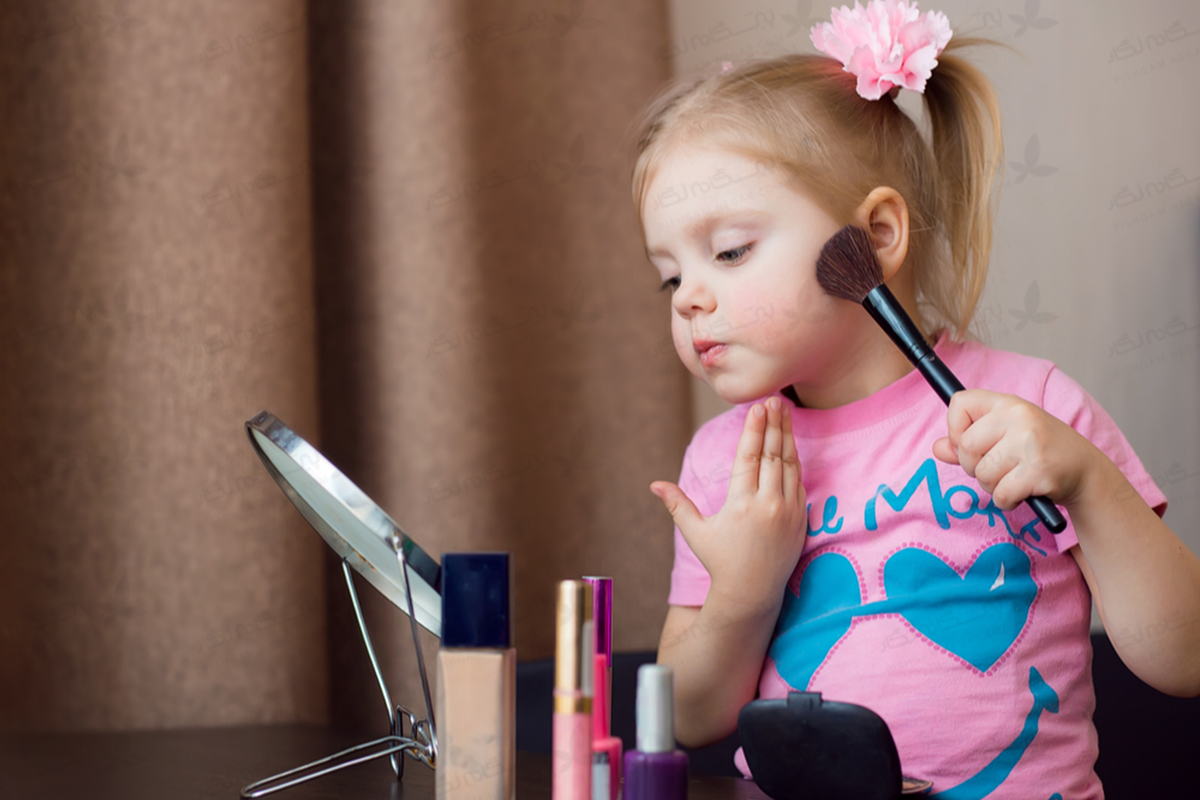
برخورد صحیح هنگام مواجه شدن با آرایش کردن کودکان
- با لحنی مهربان و منطقی، برای کودک خود توضیح دهید، که آرایش مناسب سن او نیست و به پوست صورت او آسیب میرساند. به او بگویید، که کودکان آنقدر زیبا و بی عیب و نقص هستند، که هیچگونه نیازی به لوازم آرایشی ندارند. برای او توضیح دهید، که میتواند در سنین بالاتر، برای خود لوازم آرایشی جداگانه تهیه کند و از آن استفاده کند، اما هنوز زمان آن فرا نرسیده است. کودکان باید بدانند، که به صورت طبیعی پوستی سالم و شفاف دارند و بسیار زیبا هستند.
- چه اشکالی دارد، که کودکان نیز به دنبال زیبایی و آراستگی باشند؟ اگر دختر کوچولو خود را هنگام آرایش کردن دستگیر کردید، عصبانی نشوید و فریاد نزنید، با مهربانی به سراغ او بروید و به او بگویید، می توانید چند گل سر یا تلهای رنگارنگ برای او تهیه کنید، تا زیباتر و جذابتر شود و روشهای مختلف بستن مو را، به او آموزش دهید.
- الگوی کودک خود باشید، سعی کنید کمتر جلوی چشمان کودک خود آرایش کنید یا هنگام آرایش کردن، در اتاق خود را ببنیدید. کودکان در سنین پایین، از نزدیکان خود به خصوص پدر و مادر، الگوبرداری میکنند و تصور میکنند، که کار درست را انجام میدهند، اگر دوست ندارید، کودک شما به سمت لوازم آرایشی برود، جلوی چشمان او آرایش نکنید. کودکان آن چیزی را که میبینند، به خاطر سپرده و انجام میدهند.
- کودکان، رژلب، لاک، رژگونه و مواد آرایشی رنگارنگ را بیشتر دوست دارند و تمایل بیشتری، به استفاده از آنها دارند، این مواد آرایشی جذاب و رنگی، حتی برای بزرگسالان نیز وسوسه انگیز است. شما میتوانید، اینگونه مواد آرایشی را، از جلوی چشمان کودک خود پنهان کنید و داخل کمد یا کشو خود بگذارید.
- اگر کودک خود را در حین آرایش کردن مشاهده کردید، به او نگویید، ای وای چقدر زیبا شدی و شگفت زده شوید و از او عکس بگیرید. این برخورد شما باعث میشود، کودک فکر کند، که کار درستی انجام داده است و چون شما او را تشویق کردید، پس او با این کار زیباتر شده است، در نتیجه، کودک این کار را تکرار می کند و حس میکند، پیش از این زیبا نبوده است.
- شما میتوانید، لوازم آرایشی کودکان، که دارای مواد ضد حساسیت هستند، برای کودک خود تهیه کنید. این مواد، آسیب کمتری به پوست صورت او وارد میکنند، هم چنین، عطرها و اسپریها مخصوص کودکان در بازار وجود دارد، که برای کودکان مناسب است و احتمال بروز مشکلات تنفسی را کاهش میدهد. اما بهترین روش این است، که فرزند خود را متقاعد کنید، که بدون آرایش زیبا و بدون نقص است.
- به کودک خود آموزش دهید، آرایش کردن مخصوص بزرگسالان است و او اجازه ندارد، به لوازم آرایشی شما دست بزند، این موضوع را با مهربانی و لحنی کودکانه به او بگویید. اگر با پرخاش و لحنی تند با او حرف بزنید، او نسبت به این موضوع حساستر میشود و مطمئن باشید، هنگامیکه در حال آشپزی کردن هستید یا حواس شما پرت است، فرزند شما مخفیانه، به سراغ لوازم آرایشی میرود.
- به او بگویید، پوستی زیبا و لطیف دارد، که بسیاری از افراد آرزوی چنین پوستی را دارند. برای او توضیح دهید، که دامنه آسیب مواد آرایشی، تا چه اندازه میتواند گسترده باشد و چه آسیبهایی که به پوست وارد میکند. او باید آگاه باشد، که سلامت پوست بسیار مهم است. علاوه بر آن، برای کودک خود خط قرمز تعیین کنید و در موارد محدودی به او اجازه دهید، از لوازم آرایشی، با اجازه شما استفاده کند.
- کودک را تهدید نکنید و به او نگویید، پدرت که آمد، تکلیفت را روشن میکنم. این گونه برخوردها باعث میشود، امیال کودکان سرکوب شود، زیرا آنان در سنین حساسی قرار دارند. دختربچهها نیز همانند خانومها، به زیباتر شدن علاقه نشان میدهند و این طبیعت جنس زنان است، که در هر سنی که باشند، زیبایی برای آنها اولویت دارد. برخورد تند و تهدید آمیز، باعث میشود، کودک میل و علاقه خود را سرکوب کند و این موضوع در بزرگسالی، برای او تبدیل به عقده خواهد شد.
- نگرانی والدین، از آن جایی شروع میشود، که کودکان دائما به سراغ لوازم آرایشی میروند و تا حواس مادر پرت میشود، با رژ و رژگونه، به صورت خود حمله میکنند یا در موقعیتهای زمانی و مکانی نامناسب، این کار را انجام میدهند. به کودک خود آموزش دهید، فقط می تواند در منزل با اجازه شما، آرایش کند.
- لوازم آرایشی را دم دست قرار ندهید. اگر در تربیت فرزند خود، به شدت سختگیر هستید و این موضوع باعث ناراحتی و نگرانی شما شده است، لوازم آرایشی خود را از روی میز جمع کنید و داخل کمد یا کشو، جایی که کودک به آن دسترسی نداشته باشد، قرار دهید.
- برخی اوقات، به کودکان اجازه دهید، از لوازم آرایشی به میزان کمی استفاده کنند. اگر در این موضوع به شدت سختگیری کنید و کودک را از این کار منع کنید، ممکن است کودک لجبازی کند و میل به آرایش کردن، در او بیشتر شود. در موارد محدود، با او کنار بیایید.
- به کودکان بیاموزید، به جای استفاده از کرم پودر، از کرم ضد آفتاب، مرطوب کنندهها و وازلین استفاده کند. به او بگویید، اینگونه محصولات، به پوست او صدمه نمیزند و پوست او را لطیفتر و براقتر میکند. بهترین کرم ضد آفتاب برای کودکان و جلوگیری از آفتاب سوختگی، ضد آفتابهای فیزیکال است، که عاری از فیلترهای شیمیایی است و SPF آن بین ۳۰ تا ۵۰ است.
- درباره الگو برداری و همانند سازی برخی پسر بچهها، با مادر یا خواهرشان باید دقت کرد. در صورتی که پسر بچهها، رفتارهایی مغایر با جنسیت خود دارند مانند آرایش کردن یا تمایل دارند، در جمعهای زنانه حضور داشته باشند و دوست ندارند با پدر خود جایی بروند، این رفتارها امکان دارد، پیامدهای ناخوشایندی در زندگی فردی و اجتماعی کودک، به همراه داشته باشد. در این وضعیت، به صورت منطقی و با لحنی مناسب، با کودک خود صحبت کنید و اختلاف و تفاوتهای رفتاری بین زن و مرد را، برای او توضیح دهید. در این کار میتوانید، از یک مشاور کودک کمک بگیرید.
برخورد اولیه شما، در مواجه شدن با چنین صحنهایی بسیار مهم است. برخورد پرخاشگرانه و تند، میتواند شرایط را بدتر کند، با کودک خود صحبت کنید و به او بگویید، او زیباترین فرشته دنیا است و چهره او برای زیباترشدن، به هیچ گونه مواد آرایشی نیاز ندارد، برای او توضیح دهید، در سنین بزرگسالی، اجازه دارد برای خود لوازم آرایشی تهیه کند. به کودک خود آموزش دهید، که باید مراقب سلامت و شادابی پوست خود باشد و مواد آرایشی، شادابی و سلامت پوست او را از بین میبرد.